Street marketing in St. Louis
A useful St. Louis street marketing campaign starts with a specific audience, not a stack of printed material. Streetforce brings together door hanger delivery, flyer distribution, guerrilla marketing, poster posting, and hand-to-hand promotion at conventions. The right combination depends on whether you want to reach households, neighborhood shoppers, event visitors, or business attendees. Start with the action you want someone to take, then choose the places and format that make that action convenient.
St. Louis city is separate from St. Louis County, while the Mississippi River separates Missouri routes from Illinois communities; boundaries should be explicit.
A Tower Grove South household offer can use selected residential streets, while a Soulard event campaign can focus on approved neighborhood venues. These are planning examples, not claims of completed local projects. Use the neighborhoods below to describe your preferred territory, then confirm campaign dates, property access, local requirements, and staffing availability before making a commitment.
Door hanger delivery in St. Louis
Door hanger delivery connects a household-focused offer with a defined residential area. For a St. Louis campaign, identify the streets you want to include, the kinds of homes that fit your audience, and the response destination printed on your creative. A home-service business might start with selected blocks around Central West End; a neighborhood retailer may prefer households closer to Soulard. These choices should come from your customer profile rather than assumptions about every resident.
Plan door-to-door distribution around accessible properties and respect no-solicitation signs, building rules, and resident requests. Apartment entrances, gated communities, and private developments need an access review. Door hangers belong on permitted doors, not inside mailboxes. Keep the offer readable, include a clear contact method, and define how repeat visits or excluded addresses will be handled before a route is approved.
Plan this serviceFlyer distribution in St. Louis
Local flyer distribution can support a store opening, community event, seasonal offer, or service launch. The strongest brief explains who should receive the flyer and why the message matters at that location. In St. Louis, a promotion near Soulard may need different wording and timing from one in The Hill. Choose a practical distribution window and a readable format, with one primary next step rather than several competing calls to action.
Separate permission-based business placements from person-to-person distribution and residential routes. A shop counter, community venue, or event space must agree to receive materials; a public-looking sidewalk does not automatically mean unrestricted commercial activity. Confirm property boundaries and applicable rules, avoid obstructing entrances, and make it easy for people to decline. A dedicated offer code or destination can help distinguish responses from other advertising channels.
Plan this serviceGuerrilla marketing in St. Louis
Guerrilla marketing uses an unexpected physical encounter to make a brand memorable, but a creative idea still needs a workable site plan. Consider a permission-based pop-up, staffed product introduction, or interactive moment suited to your audience in St. Louis. Build the concept around a real reason to engage: a relevant sample, an invitation, or a useful demonstration. The campaign should complement its setting rather than interrupt neighborhood life.
Before production, identify the site owner, approval process, space requirements, staffing needs, and cleanup responsibilities. Do not assume that painting, adhesive graphics, sidewalk markings, or installations are allowed. Weather, accessibility, pedestrian clearance, and any event restrictions belong in the plan. Keep claims realistic and choose an activation that can be adapted or relocated if the proposed site is unavailable.
Plan this servicePoster posting in St. Louis
Poster posting gives an event or offer a physical presence beyond a single interaction. For St. Louis, shortlist approved indoor displays, participating businesses, and managed posting spaces that fit the intended audience. A poster for a neighborhood event should make the date, location, and next step easy to find. Placement quality matters more than covering unrelated surfaces, especially when someone has only a moment to read the message.
Get permission for each display and agree on how long the poster may remain. Utility poles, transit property, public infrastructure, and privately owned walls are not automatically legal posting locations. Specify material sizes, installation methods, replacement expectations, and removal dates. If a broader regional rollout is needed, review each community separately rather than carrying one location's approval into another jurisdiction.
Plan this serviceHand-to-hand distribution and conventions
Convention hand-to-hand distribution puts a person behind the message. America's Center Convention Complex is a local-area event-planning reference, not a confirmed Streetforce partner or an approved distribution site. A useful event brief names the actual show, dates, attendee profile, and permitted distribution zone. Consider how a short invitation or promotional piece will connect with the attendee's reason for being there, instead of relying on a generic citywide offer.
Organizer approval, exhibitor rules, credentials, and venue boundaries must be checked before any event activity is scheduled. Distinguish a booth-based interaction from an outdoor encounter and do not assume that surrounding hotels or sidewalks are covered by the same authorization. Prepare a concise staff introduction, allow people to decline, and avoid interrupting queues or blocking access. Confirm quantities and replenishment arrangements around the approved schedule.
Plan this serviceNeighborhoods and nearby communities
Central West End, Soulard, The Hill, Tower Grove South, Downtown are examples of neighborhoods or districts within St. Louis to consider when defining a local campaign. They are starting points, not an exhaustive map or a guarantee of access. Your brief can name a smaller street boundary, a specific business area, or an event destination. That level of detail helps separate household delivery from shopper-facing promotion and avoids an undefined request to cover the whole city.
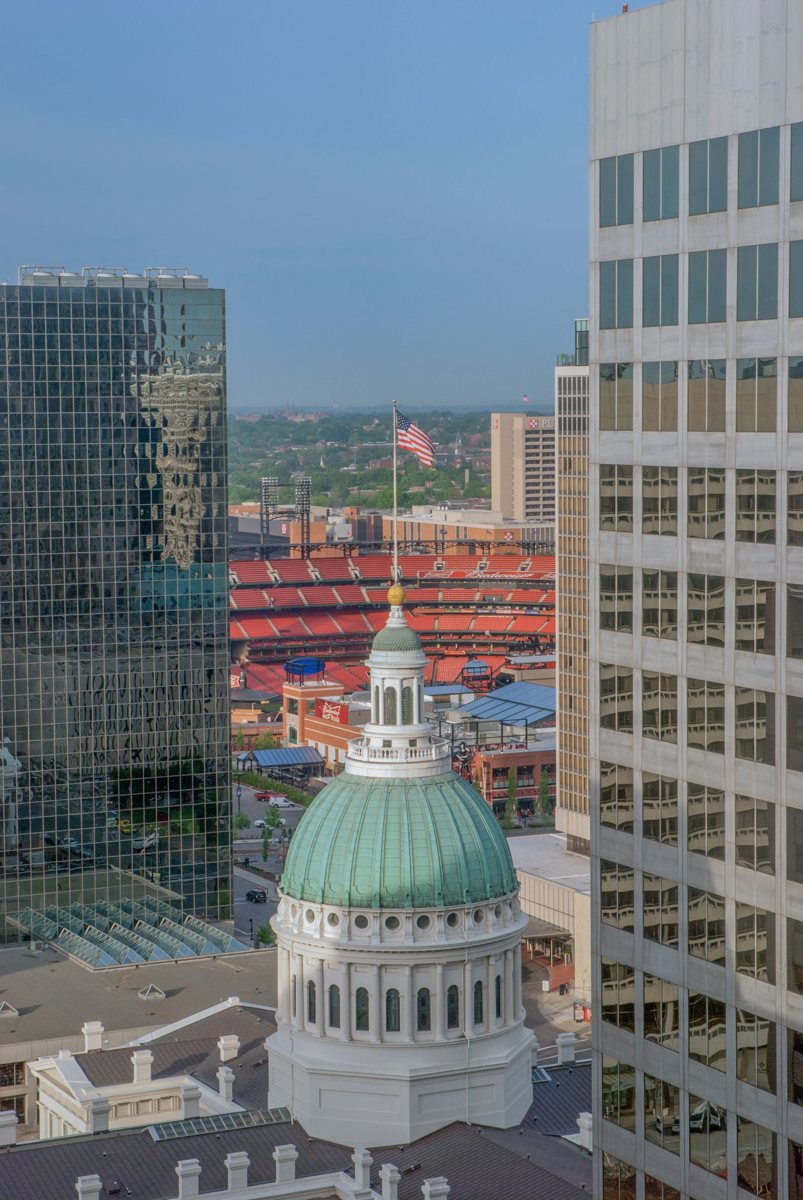
The broader area also includes Clayton, University City, Chesterfield, Kirkwood, Webster Groves. These are nearby cities, towns, or communities, not neighborhoods inside St. Louis. Some places are unincorporated, and regional campaigns can cross county or state lines. List each requested territory individually, check its jurisdiction, and confirm feasibility before including it in a rollout. A local photograph illustrates the city; it does not document a Streetforce campaign.
Build your St. Louis campaign brief
Bring together your preferred service mix, audience, neighborhoods, quantities, budget range, and intended launch window. Include artwork requirements, event details, and any property approvals already obtained. Door hangers, flyers, posters, guerrilla activations, and convention promotion can share a visual identity while using different messages for different settings. Availability, final scope, pricing, and reporting expectations need confirmation; this page is a planning guide, not a promise of local crews or a local office.
Use the campaign brief form to organize those details. The form creates a downloadable document on your device and does not send an inquiry. Keep the file for your campaign conversation, and review the territory and permissions before scheduling distribution. A clear brief makes it easier to compare formats and decide what belongs in the first phase rather than committing to every service at once.
Local reference
St. Louis geography and local context — WikipediaEvent schedules, site access, and local distribution rules require confirmation for your campaign.